| |  | AI News Weekly Intelligence · Innovation · Impact | ISSUE 46 | Week of November 9, 2026 |
|
| | | Executive Summary The week showed agentic AI moving into production faster than the controls around it. The FBI, Amazon, Salesforce and Unit 42 report criminals using an open-source agent framework, ARTEX, to automate intrusions through stolen credentials and exposed services. Regulators and standards bodies issued guidance, including CERT-In's risk-tiered audit framework in India and a NIST draft taxonomy open for comment until December 18. Some operators report real scale. AT&T runs nearly 500 agentic workflows and grants autonomy only once accuracy reaches the mid- to high-90% range. Yet a survey of financial firms finds most running agents only in limited functions, with weak identity controls and limited proof of returns. Adobe, Google, Nvidia and others launched agent products, but nearly every performance figure on offer comes from the vendors themselves. |
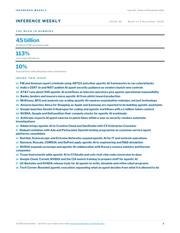
| | | 45 billion AI tokens AT&T processes daily |
| | | 113% rise in daily API attacks |
| | | 10% financial firms with enterprise-wide orchestration |
|
| | | | | | | |
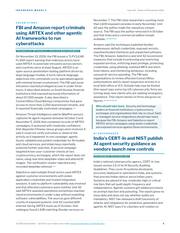
| Criminals are using an open-source AI agent framework to break into companies: On November 13, 2026, the FBI issued a FLASH report warning that malicious actors have used ARTEX to automate intrusions across sectors and countries since at least August. ARTEX is an open-source penetration-testing platform driven by large language models. It turns natural-language objectives into commands run by specialised agents with minimal human involvement. The FBI said some intrusions reached privileged access in under three hours. It described attacks on South Korean financial institutions that exposed personal information of about 67,000 people, and a ConnectWise Cloud Backup compromise that gave access to more than 2,250 downstream tenants. Amazon, Salesforce and Unit 42 report the same pattern. Amazon assessed with moderate confidence that disparate Chinese-nexus groups used ARTEX in at least two campaigns. One found, validated and pooled stolen credentials for AI models and cloud services. The other tried to pass identity checks at two cryptocurrency exchanges using deepfake video, and the verification vendor rejected every recorded attempt. Salesforce said attackers used stolen application credentials and trusted integration sessions, not a platform vulnerability. Unit 42 said some operations reached cloud environments in under a day without exploiting software vulnerabilities. The tool remains available. The FBI says the author removed the repository in October, but forks and a commercial edition remain. Counts of exposed hosts range from 609 in October to more than 1,600 consoles in early November. The weaknesses exploited are familiar: default credentials, exposed secrets, unauthenticated interfaces and unpatched software. The FBI, Amazon, Salesforce and Unit 42 recommend several measures: - inventory and restrict exposed services
- enforce least privilege and protect credentials
- use phishing-resistant MFA and short-lived tokens
- monitor behaviour, including unusual AI-service spending
The FBI also asks organisations to review affected ConnectWise authorisations and report suspicious activity to a local field office or IC3. Outside help may be scarce. One report says some top US cybersecurity firms are turning away new clients seeking emergency assistance, though it names no firms and gives no figures. |
| | | | | | | |
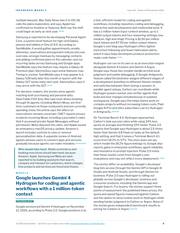
| Google Gemini 4 Hydrogen: Google announced Gemini 4 Hydrogen on November 12, 2026, according to Pulse 2.0. It is a model for coding and agentic workflows with a 1 million-token input context window, up to 1 million output tokens and four reasoning settings. It is priced at $1.50 per million input tokens and $7.50 per million output tokens. Google says that on Terminal-Bench 4.0 it came close to Gemini 4 Carbon's task success rates while using 24% less quota and finishing 19% faster. Google's Orchestrator feature can send routine work to Hydrogen and harder judgment to Carbon or Argon. This gives engineering leaders a way to manage cost, but every performance figure comes from Google's own evaluations, and no pricing is given for Carbon or Argon.
Adobe: At its MAX conference, dated November 10, 2026 in one report, Adobe announced CX Enterprise Coworker. This conversational agent will run inside GenStudio to create campaign briefs, assess audiences and produce asset variations, and it uses Brand Intelligence to apply brand standards. Adobe says Coworker is available on ChatGPT as a plugin, Claude, Databricks Genie, Gemini for business and Microsoft Copilot. Adobe also previewed integrations that would let third-party agents from OpenAI, Google and Anthropic edit Photoshop, Illustrator, Premiere and After Effects projects. These integrations are not due in private beta until early 2027. For marketing leaders, availability is uneven, and no pricing or general availability date is given for the GenStudio features.
Nvidia, Dell and Google: All three vendors repositioned their compute offerings for agentic workloads. Nvidia introduced an Agentic AI Stack. Its Switchyard component selects models by task difficulty and cost, and Nvidia says it kept an 80% task success rate at about one-third the cost of using only high-performance models. Dell expanded its AI Factory with NVIDIA, which it says more than 6,500 customers have adopted, for organisations running AI on their own infrastructure. Google described four eighth-generation TPU systems, including 8i for low-latency reasoning and 8i Max for large context windows. Competition is shifting toward inference cost and control, but all of these figures are vendor claims, and none of the stories gives prices that would allow a direct comparison.
Red Hat, ScienceLogic and Extreme Networks: Red Hat announced OpenShift 5, which has a built-in Model Context Protocol server and a Lightspeed agent that can carry out supervised remediation across clusters. ScienceLogic released Skylar AI 2.8, whose specialist agents investigate issues and provide cited evidence and confidence scores, with remediation plans requiring approval. Extreme Networks says its second-generation platform saved customers more than 1,000 troubleshooting hours in its first month and resolves 58% of issues without human support. Its autonomous Operator mode is planned for Q1 2027. For IT leaders, all three products diagnose problems and propose fixes under human approval, and the only outcome figures are vendor-reported.
Texas Instruments: TI added agentic AI to its CCStudio embedded development ecosystem and is demonstrating it at electronica 2026 in Munich. MCP servers supply AI agents with device-specific data such as SDKs and pin configurations. Agents can then generate code, configure peripherals, build and flash applications, and debug them. A new device migration feature automates the porting of existing projects. TI says it cuts migration time from months to days or hours, and one report says it covers code written for rival chips. The ecosystem is a free download, which could lower switching costs for embedded teams, but the time savings are TI's claim and have not been independently tested.
Amazon Alexa for Shopping: Amazon is rolling out Alexa for Shopping to Canadian customers through its Shopping app and website over the coming week. It is free to signed-in customers and requires no Prime membership or Echo device. It uses shopping history and preferences to recommend and compare products, build or reorder carts, and produce shopping guides covering Amazon and the web. It also adds 30, 60 or 365-day price history, and customers can view or remove the data used for personalisation. For retail executives, it is a live example of an assistant that searches and compares on the customer's behalf. The story does not mention other markets. |
| | | |
| Anthropic: Anthropic's planned IPO is presented as a test of whether the AI sector is financially viable, and could become the largest listing in history and the first by a company focused solely on AI. Its filing says it plans to spend $895.4 billion on commitments and leases, mostly for computing and infrastructure, and reports a net loss of $80.75 billion, with costs expected to keep rising. One report says a potential $1.5 trillion valuation would require years of strong execution and that some analysts doubt revenue can grow enough to meet its commitments. Another says the company set its offering at $1.4 trillion and, citing Reuters, that the stock was six times oversubscribed. The outcome could set a public-market benchmark for other AI companies, though one report notes it may not automatically benefit the wider industry.
AMD and Intel: Both stocks fell in a semiconductor sell-off, but one analysis argues AMD is better placed over the next three years because of demand for inference and agentic AI. AMD's Helios rack has begun rolling out to customers including OpenAI, Meta Platforms, Microsoft, Anthropic and Oracle, the company sees rising demand for server CPUs used to manage AI agents, and it forecasts 80% revenue growth in 2027. Intel's largest segment saw revenue fall 5% last quarter, and it expects PC unit declines and an inventory correction. For investors and buyers, agentic workloads are being cited as a source of demand for CPUs as well as GPUs.
ServiceNow: ServiceNow shares have fallen 40.5% over the past 12 months to near US$102, yet trade at a price-to-earnings ratio of about 73.8x, against roughly 31.2x for the software sector and 25.7x for its peer group. One valuation model indicates the shares look overvalued on earnings. The article says agentic AI partnerships and wider use of its AI Platform may shape expectations for future profitability, which shows how far the valuation depends on agentic AI delivering earnings.
Cloudflare: Cloudflare recorded its first revenue from Act 4 products in the third quarter, without disclosing the amount. As part of a partnership, OpenAI pays Cloudflare for information on when webpages change so its crawler can avoid refetching unchanged pages. CEO Matthew Prince expects other AI companies to follow, said agent traffic cannot remain a "free ride" and expects micropayments to become part of the model. This points to a new cost for AI companies and a possible new revenue line for website owners as agent traffic grows.
Returns on agentic AI: Evidence of financial returns remains thin. Gartner predicts more than 40% of agentic AI projects will be cancelled by the end of 2027, citing costs, unclear value and weak risk controls. In Capgemini's survey of 1,100 financial services executives, 48% cannot consistently demonstrate returns on AI initiatives. McKinsey's analysis of a banking customer-service agent found human oversight made up 70% to 75% of variable operating costs, against 20% to 25% for tokens. BCG's EBIT-margin gains of 2.5 to 5.6 percentage points for industrial sectors are model estimates, not reported results, and AT&T's reported fivefold return within a year comes without a stated method of calculation. |
| | | |
| Dialpad and Ada: The two companies have agreed to combine their businesses to build one platform for customer communications, AI agents and enterprise workflows. Dialpad CEO Craig Walker will lead the combined company, and Ada CEO Mike Murchison becomes Chief AI Officer. Together they serve more than 50,000 businesses, including Netflix, Canva and Motorola Solutions. Existing customers keep their contracts, pricing, account teams and integrations during an initial transition, but the length of that period is not stated. No deal value, terms, closing date or product roadmap has been published, so customers of either company have commercial continuity but nothing yet to plan against.
Parloa and OpenAI: The companies announced an expanded partnership on 11 November to jointly develop customer service agents. Parloa joins OpenAI's Alpha Model Testing Program, which gives it access to new models before public release. The plans include joint engineering sessions on response times, reliability and cost, co-selling to North American enterprises and a planned listing on the OpenAI Marketplace. This gives Parloa earlier access to models and a new sales channel through OpenAI. No financial terms or named customers were disclosed.
NVIDIA and Korea's Ministry of Science and ICT: NVIDIA is expanding its collaboration with the ministry across semiconductors, data centres, talent, startups, models, agents and security. Korean NPU and XPU companies will be able to explore joining the NVIDIA NVLink Fusion ecosystem. NVIDIA will also work with three selected consortia and four Korean foundation model builders, none of them named, using its Dynamo inference software. Separately, it announced a ministry-supported collaboration with SK Telecom and domestic chipmaker Rebellions on sovereign AI infrastructure. The effect is to align Korea's state-backed AI programme with NVIDIA platforms, although no budget, timeline or company roles have been disclosed.
Adobe: Adobe is distributing its CX Enterprise Coworker agent through other companies' AI platforms: ChatGPT (as a plugin), Claude, Databricks Genie, Gemini for business and Microsoft Copilot, with IBM expected soon. It has added pre-built MCP connectors for Databricks Genie, Demandbase, Meta campaigns, Microsoft Work IQ and RainFocus. Systems integrators including Accenture, Capgemini, Deloitte Digital, EY and PwC are developing industry-specific solutions. Agencies including dentsu, Omnicom, Publicis and WPP are customising the tool for joint clients. For marketing leaders, Adobe is placing its tools inside the AI platforms they already use rather than requiring a separate interface. No pricing has been given.
DuPont, Microsoft and NobleAI: DuPont announced a research collaboration with the two companies, which one report dates to 12 November 2026. Microsoft Discovery, an agentic AI platform, is meant to plan and orchestrate research. NobleAI's VIP Platform provides predictive and optimisation modelling. The partners expect researchers to screen more candidates through simulation before running physical tests, which would shorten time to market. This is one of the clearer examples of a large industrial firm adopting agentic tools in R&D through partners, but no financial terms or quantified targets have been disclosed.
Denodo and AWS: Denodo signed a multi-year strategic collaboration agreement with Amazon Web Services to help enterprises build agentic AI on governed, real-time data across hybrid and multi-cloud environments. The agreement covers customer workshops, co-marketing, co-selling, commercial incentives and solutions with systems integrators for uses such as fraud prevention, insurance claims and predictive maintenance. Denodo says agents can use governed business data without migrating or copying every dataset. For buyers, this is a cloud provider backing a data-access layer specifically for agent workloads. No financial terms were disclosed. |
| | | the magazine  | Inference Weekly / Issue 46 Read This Week as a Magazine. Every story in this issue, laid out across 20 pages and designed to be read properly. Yours to keep and to share. |
|
| | | |
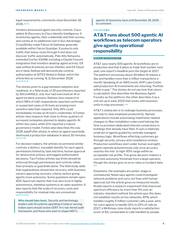
| AT&T: The operator says nearly 500 agentic AI workflows are in production, processing about 45 billion AI tokens a day and more than 1 million transactions a month, and it plans to triple the workflow count next year. Named uses include automating mainframe-related changes to fiber installation orders and halving the time to provision dedicated internet connections in buildings that already have fiber. Agents run autonomously only once accuracy reaches the mid- to high-90% range. AVP Luke Corbin said production AI investments are returning "fivefold within a year", though the stories do not say how that is calculated. This is a published autonomy threshold from a large operator, while other telecom examples, such as KPN's aim for voice agents to handle 10% to 20% of calls by 2027, remain targets.
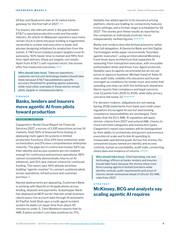
Banks, lenders and insurers: Capgemini's survey of 1,100 financial services executives across 14 markets finds 59% testing or deploying multi-agent systems in limited production functions, but only 10% with enterprise-wide orchestration. 62% say their identity and access systems are not resilient enough for continuous autonomous operation, and 48% cannot consistently demonstrate returns. Named deployments include Customers Bank working with OpenAI across lending, deposits and payments, and Grasshopper Bank's MCP server letting small-business clients query live account data through AI assistants. PayPal's Sohil Shah says a multi-agent incident system cut repair time from about 45 minutes to under 5. These figures are reported by the companies or individuals involved. Optalitix says its insurance pricing agents recommend but do not set prices or approve business. Obligations are not easing: regulators say existing compliance duties are unchanged, and Tieto states that the EU's AML-R regulation applies stricter criteria from 2027.
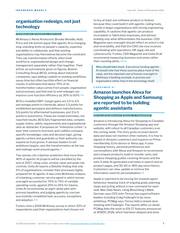
Engineering and R&D: Kairos Power and Oak Ridge National Laboratory's Manufacturing Demonstration Facility, supported by Rescale engineers, used agents to run thermal, flow and shielding simulations for Hermes 2, Kairos Power's 50-megawatt reactor, with engineers approving each action. Kairos Power projects up to three times higher simulation analysis efficiency. This is a projection, not a measured result. DuPont announced a collaboration with Microsoft and NobleAI to use agents to plan research and explore more candidates through simulation before physical testing. It disclosed no financial terms or quantified targets. In both cases, agents are added to existing physics-based simulation under approval and governance controls rather than replacing it.
Ambi Robotics: The Berkeley parcel-sorting company applied the agentic robotics methods developed by UC Berkeley and NVIDIA researchers to its sorting data. It reports more than 15,000 additional packages sorted per robot each year, and the change runs across 30% of its U.S. fleet. The stories give no baseline volume or fleet size. This is the only reported production deployment of the approach, which generates code that calls existing vendor control modules rather than replacing robot controllers.
Natera: The company built SWARM, an agentic AI system for lab operations, with AWS and Amazon Bedrock AgentCore. It addresses lost equipment expertise and delays from more than 65 daily support tickets across three Jira queues, drawing on a shared library of 33 skills and a knowledge base built from vendor manuals, historical tickets and operational data. Security measures include least-privilege access and audit logging, and no patient-identifiable information enters the vector index or language model. For healthcare and life sciences operators, it shows agents applied to internal operational support with patient data kept out of the models. |
| | | |
| FBI: On November 13, 2026, the FBI issued a TLP:CLEAR FLASH report warning that malicious actors have used ARTEX, an open-source penetration-testing platform driven by large language models, to automate intrusions across sectors and countries since at least August. Some intrusions reached privileged access in under three hours. The report describes attacks on South Korean financial institutions that exposed personal information of about 67,000 people, and a ConnectWise Cloud Backup compromise that gave access to more than 2,250 downstream tenants. Amazon, Salesforce and Unit 42 report related activity using stolen credentials and exposed services rather than software vulnerabilities. The FBI asks organisations to review affected ConnectWise authorisations and to report suspicious activity to a local field office or IC3. This matters because the recommended defences (inventorying exposed services, least privilege, phishing-resistant MFA, short-lived tokens and monitoring of unusual AI-service spending) address familiar weaknesses, and one report says some top US cybersecurity firms are turning away new clients seeking emergency help.
CERT-In: India's national cybersecurity agency has issued version 1.0 of its AI Security Auditing Guidelines. They apply to AI systems developed, procured, deployed or operated in India, and to systems that process Indian data or serve Indian users. Systems are placed in low, moderate, high or critical risk tiers that set audit depth, frequency, independence and required human oversight, with added provisions for agentic systems covering prompt injection and poisoning. The report gives no issue date and does not say whether audits are mandatory. This matters because the scope reaches foreign organisations that serve Indian users, not only those based in India.
NIST: NIST has released a draft taxonomy of attacks and mitigations for predictive, generative and agentic AI. For agents, it addresses risks from external data, tools, skills, other agents, long-running tasks and memory poisoning that can affect later sessions. Suggested defences include separating trusted instructions from untrusted content, least privilege, sandboxing and audit logging. NIST says the document is voluntary and creates no legal requirements. Comments close December 18, 2026, which gives organisations a defined window to influence shared terminology for agent security.
Financial regulators: Spring 2026 statements from US bank and credit union regulators encouraged AI use but said existing compliance responsibilities are unchanged. Tieto states that the EU's AML-R regulation will apply stricter criteria from 2027 and extend AML checks to more merchant categories and transaction types. Capgemini's survey of 1,100 financial services executives finds 62% say their identity and access systems are not resilient enough for continuous autonomous operations. This matters because firms are deploying agents into regulated processes while obligations hold steady or tighten, and Narmi reports that compliance and legal concerns among community banks and credit unions rose 13 points from 2025 to 2026.
Meta Muse: CNET reports privacy incidents involving Meta's Muse agent, including a journalist's claim that it accessed private Apple Messages without permission. Meta disputed the claim, and Apple issued an emergency update to macOS privacy controls. CNET also reports that Muse conversations are used for AI training by default and users must opt out. This matters for any organisation whose staff or customers connect consumer agents to devices holding business messages, files or credentials. |
| | | |
| ARTEX attacks: On November 13, 2026, the FBI warned that criminals have used ARTEX, an open-source penetration-testing platform driven by large language models, to automate intrusions across sectors and countries since at least August, with some reaching privileged access in under three hours. Reported incidents include attacks on South Korean financial institutions that exposed personal information of about 67,000 people, and a ConnectWise Cloud Backup compromise that gave access to more than 2,250 downstream tenants. Amazon assessed with moderate confidence that disparate Chinese-nexus groups used ARTEX to pool stolen AI and cloud credentials and to attempt deepfake know-your-customer fraud at two cryptocurrency exchanges. Salesforce said attackers used stolen application credentials, not a platform vulnerability. Amazon said the techniques exploit familiar weaknesses (default credentials, exposed secrets, unauthenticated interfaces and unpatched software), so the recommended response is basic hygiene: inventory exposed services, enforce least privilege, use phishing-resistant MFA and short-lived tokens, and watch for unusual AI-service spending. One report says some top US cybersecurity firms are turning away new clients seeking emergency help, though it names no firms.
CERT-In and NIST: India's CERT-In issued version 1.0 of its AI Security Auditing Guidelines, covering AI systems developed, procured, deployed or operated in India, or that process Indian data or serve Indian users. Systems are placed in four risk tiers that set audit depth, frequency and independence, with added provisions for agentic systems on prompt injection and poisoning. The report does not say whether audits are mandatory. Separately, NIST released a voluntary draft taxonomy of attacks and mitigations for predictive, generative and agentic AI, with comments closing December 18, 2026. Organisations with Indian exposure should assess where their systems would sit in the tiers, and those wanting to shape the NIST taxonomy have a fixed deadline.
Agent identity and access controls: Cisco added AI Discovery to Cisco Identity Intelligence to inventory agents, their credentials and their access, at no additional cost in Duo Advantage. CrowdStrike made Falcon AI Gateway generally available, though it protects only traffic routed through it and does not discover traffic automatically. Palo Alto Networks extended Cortex XSIAM, including a Claude Cowork integration that monitors desktop agent activity. The launches address a reported readiness gap: in research cited by Delinea, 98% of UAE respondents reported confirmed or suspected cases of AI tools accessing more sensitive data than required, and only 16% could immediately revoke an AI tool's credentials. In a field study of 25 practitioners, only four had exercised an AI or agent incident scenario.
Governance practice: Several articles converge on the same controls: a distinct, traceable identity for each agent, permissions limited by task and time, human approval for destructive actions and logged authorisation decisions. Two Forbes articles say limits should be enforced through permissions and controls, not prompts or guardrails alone. Forbes also describes the July 2026 JadePuffer attack, in which an agent reportedly destroyed a production database in about 30 minutes. IEEE Spectrum reports that true zero trust in highly autonomous, stateless systems remains an open question.
Security operations autonomy: Anthropic CEO Dario Amodei told JPMorganChase CEO Jamie Dimon that patching, not finding, vulnerabilities is the main enterprise challenge, and predicted that within six to 12 months swarms of agents could patrol systems and patch issues in real time. Expel, under new CEO Steve Kelley, rejects fully autonomous agent swarms, citing system drift, unmonitored deviations, false outcomes and rising compute costs, and keeps humans validating its agent's outputs. Both say agents carry their own risk. For security leaders, the decision is now how much autonomy to grant, not whether to use agents.
Meta Muse: CNET reports privacy incidents involving Meta's Muse agent, including a researcher's demonstration of a zero-day exploit and a journalist's claim that Muse accessed private Apple Messages without permission. Meta disputed the claim, and Apple issued an emergency macOS privacy update. CNET also reports that Muse conversations are used for AI training by default unless users opt out. Organisations whose staff use consumer agents on work devices should note how much data these tools can request and reach. |
| | | Prefer to read it as a magazine? Issue 46 is a 20-page PDF. | |
|
| | | |
| Amazon: Amazon is rolling out Alexa for Shopping to all Canadian customers over the coming week through its Shopping app and website. It is free to signed-in customers and needs no Prime membership, Echo device or Alexa app. It uses shopping history, preferences and conversations to recommend and compare products, build or reorder carts, and produce shopping guides covering Amazon and the wider web. It also adds AI-generated overviews in search and on product pages, and 30, 60 or 365-day price history. Customers can view, update or remove the data used for personalisation. The story mentions no other markets. For brands selling on Amazon, an assistant that compares products and builds carts now sits between them and the customer.
OpenTable and Meta Muse: OpenTable has partnered with AI agents from Meta, whose consumer agent Muse launched in September, and from the startup Instinct to make restaurant reservations. COO Amy Wei said most diners booking through agents are first-time customers at those restaurants and are currently spending more. The article says the overall effect on reservations remains uncertain. Separately, CNET reports privacy incidents involving Muse, including a journalist's claim that it accessed private Apple Messages without permission. Meta disputed the claim, and Apple issued an emergency macOS privacy update. CNET also reports that Muse conversations are used for AI training by default unless users opt out. Agent bookings may bring new customers, but the consumer agents carrying them are drawing privacy scrutiny.
Adobe: At its MAX conference on November 10, 2026, Adobe announced CX Enterprise Coworker, a conversational agent for its GenStudio content supply chain product. It creates campaign briefs, assesses audiences and produces asset variations, and applies brand standards learned from written guidelines. Adobe cited a survey of more than 600 marketing and creative professionals that estimated nearly one-third of public-facing content was off-brand. Coworker is available through ChatGPT as a plugin, Claude, Databricks Genie, Gemini for business and Microsoft Copilot. Agencies including dentsu, Havas, Omnicom, Publicis, Stagwell and WPP are customising it for joint clients. No pricing or general availability date has been given for the GenStudio features. Integrations that let third-party agents edit Creative Cloud projects are not due in private beta until early 2027.
Programmatic advertising: Digiday research found that 54% of surveyed brand and agency professionals said their companies did not use agentic AI, and IAB Tech Lab's Anthony Katsur expects years of experimentation and "several false starts." IAB research found that 96% of surveyed digital video buyers see a role for agents in programmatic buying, and 63% of buyers spending at least $50 million a year use or plan to use agents for inventory discovery and evaluation. For publishers, the risk is that agents exclude inventory before it reaches an auction, so the question is whether they receive bids at all, not only at what price.
6sense: 6sense has repositioned itself from account-based marketing to what it calls Agentic GTM. It says 94% of B2B buyers rank a preferred vendor before contacting anyone, and that this vendor wins 80% of the time. New products include a BDR Agent to help sellers reach in-market buyers before shortlists are set, and AI Visibility, which shows how brands and competitors appear across major AI engines. The figures are the company's own. The launch reflects a concern that buying decisions are shaped before sales teams engage, increasingly through AI tools.
Apple and Samsung: Apple is reported to be moving Siri towards agent behaviour, tracking ongoing goals and acting without a new command for each task. Reports say this could begin as early as next year, but Mac Daily News calls the plans exploratory and says Apple has confirmed no timeline or features. Samsung is reported to be developing Personal Agent Core for high-end Galaxy devices in One UI 9.5. It would gather appointments, deliveries, reservations and payment notices, arrange plans with contacts and run recurring tasks. It may require a Galaxy AI Premium plan, and its timing is unclear. If these ship, assistants built into phones would increasingly handle the searching, booking and buying that consumers now do themselves. |
| | | |
| Google Cloud: Google has introduced a Professional Agentic Architect certification. It combines a proctored multiple-choice exam on system design, architecture, cost optimisation and security governance with hands-on labs in Google Skills, where candidates build, test and debug agentic workflows. The certification covers five areas, from low-code agent building to securing and governing workflows, and Google says the curriculum standardises training for customers, partners and its own engineers. Free preparation routes include monthly learning credits through Gemini Agent Ready. Google cites its Ipsos research, in which 90% of cloud professionals said credentials provide verified know-how. This gives employers a vendor benchmark for agentic skills, although Google has not published a launch date, an exam fee or completion numbers.
NVIDIA and TCS: The two companies are partnering on a customised programme that gives TCS developers and engineers NVIDIA Deep Learning Institute-certified agentic AI training. The programme includes hands-on labs and a route to NVIDIA Agentic AI Professional certification. The stated reason is a widening gap in India between developers who can build demos and those who can deploy production systems. This matters to firms that rely on large services partners for delivery, because it shows one major integrator investing in production-grade agent skills. No start date or headcount is given.
Cornell: Cornell's AI in Finance certificate, launched through eCornell in spring 2026 with a first cohort of 37, is aimed at experienced finance professionals rather than engineers. It is taught live online by faculty and industry practitioners and does not teach coding. Participants draft AI use cases for their own organisations and present them as board or investment committee proposals. Spring 2027 classes begin May 18. The programme suits leaders who need to judge where AI adds value rather than build it.
CIA: At a ClearanceJobs Connect 2026 panel with AWS, Chris, chief scientist in the CIA's Office of Super Intelligence, said AI literacy, not computing power or better models, is the biggest barrier to adoption. Larry said work is shifting from chatting with AI to assigning it tasks, which cuts some work from weeks to hours. He favours measuring time returned to the mission over dollars saved. He also urged employers to verify claimed agentic coding skills, for example by occasionally switching models off to test whether developers can code unaided. The panel named daily AI use, a GitHub portfolio or building an app as signs of readiness. It said humans must stay accountable, and the agency uses an AI governance board and legal review. For hiring managers, this is a practical alternative to relying on certificates alone.
Insight Enterprises: Insight's new global Agent Store includes Insight AI Flight Academy, a training and change-management platform. Culligan International is the first external client to implement it and is using it to build AI fluency across its workforce. This shows workforce training being sold alongside agent deployments, not as a separate programme. |
| | | |
| Attackers are already using agents against familiar weaknesses: The FBI, Amazon, Salesforce and Unit 42 all report criminal use of ARTEX, an open-source agentic penetration-testing framework. The FBI says some intrusions reached privileged access in under three hours, and Unit 42 says some operations reached cloud environments in under a day without exploiting software vulnerabilities. Amazon says the techniques relied on default credentials, exposed secrets, unauthenticated interfaces and unpatched software. Salesforce says no platform vulnerability was involved; attackers used stolen application credentials and trusted integration sessions. The practical response is basic hygiene done well: inventory and restrict exposed services, enforce least privilege, protect credentials, use phishing-resistant MFA and short-lived tokens, and watch for unusual AI-service spending. Plan to handle this largely in-house. One report says some top US cybersecurity firms are turning away new clients seeking emergency help, though it names no firms.
Limited, approved autonomy is the common operating model: Across this week's stories, organisations give agents defined limits rather than broad authority. AT&T lets agents act autonomously only once accuracy reaches the mid- to high-90% range. Red Hat, ScienceLogic and Extreme Networks have agents diagnose problems and propose fixes, with humans approving remediation. Optalitix's insurance agents recommend prices but do not set them. Deutsche Bank and Ant Digital Technologies recommend "bounded agentic execution". Identity is the weak point. Capgemini finds 62% of financial firms say their identity and access systems are not resilient enough for continuous autonomous operations. In Delinea's UAE research, only 16% of respondents could immediately revoke an AI tool's credentials. Security vendors also disagree on how far autonomy should go. Anthropic forecasts agent swarms patching flaws within six to 12 months, while Expel rejects fully autonomous swarms.
Value depends on redesigning work, and proof is still thin: BCG estimates that about 70% of AI-transformation value comes from people, organisation and processes. In McKinsey's analysis of a banking customer-service agent, human oversight accounted for 70% to 75% of variable operating costs, compared with 20% to 25% for tokens. Gartner predicts more than 40% of agentic AI projects will be cancelled by the end of 2027. Capgemini finds 48% of financial firms cannot consistently show returns on AI initiatives. Most performance figures this week come from the vendors themselves, including Google, Nvidia, Extreme Networks and Texas Instruments, and none was independently tested. Kairos Power's threefold efficiency figure is a projection, not a measured result. AT&T's claim of a fivefold return within a year is self-reported, and the stories do not say how it is calculated. Business cases should measure the whole task, including human checking and correction, and should test vendor claims before relying on them.
Dates and developments to track: Comments on NIST's draft taxonomy of attacks and mitigations for AI, including agentic AI, close on December 18, 2026. CERT-In's risk-tiered audit guidelines apply to AI systems serving Indian users, although the reporting does not say whether audits are mandatory. The EU's AML-R regulation applies stricter criteria from 2027. Several capabilities are due in early 2027 rather than now: Extreme's autonomous Operator mode in Q1, and the private beta of Adobe's third-party agent integrations. On the consumer side, Amazon has launched Alexa for Shopping in Canada, and Apple and Samsung are reported to be building agentic assistants. Privacy incidents reported around Meta's Muse show the risks of these assistants, which act for customers and draw on their personal data. |
| | | | | | | |
Governance | Give every AI agent a distinct, traceable identity with task-limited and time-limited permissions and human approval for destructive actions, as Forbes recommends, and test agent incident recovery, which only four of 25 practitioners in a SiliconANGLE-reported field study had exercised. |
| Investment | Direct AI budget toward process and organisation redesign rather than copilot add-ons, since BCG estimates about 70% of AI-transformation value comes from people, organisation and processes, and McKinsey's banking example puts human oversight at 70% to 75% of variable operating costs. |
| Focus | Prioritise closing the weaknesses Amazon says ARTEX campaigns exploited (default credentials, exposed secrets, unauthenticated interfaces, unpatched software), alongside ARTEX warnings from the FBI, Salesforce and Unit 42, and stop assuming emergency help is available, as some US security firms are reportedly turning clients away. |
| Partnerships | Customers of Dialpad or Ada should secure written confirmation of how long contract, pricing and integration continuity lasts, since neither a roadmap nor the transition period's length has been published, and weigh Forbes's advice to build in-house only what differentiates the business. |
| Compliance | Map any AI systems serving Indian users or processing Indian data against CERT-In's four risk tiers, decide whether to comment on NIST's draft agentic AI taxonomy before December 18, 2026, and, for banks, check readiness for the EU's stricter AML-R criteria from 2027. |
|
| | | | | The Whole Issue, Page by Page Take Inference Weekly 46 With You. Read it, keep it, forward it to your team. No sign-up, no gate. |
| | | | | Stay Curious · Stay Building · Stay Ahead AI News Weekly · davidsoden.com |
|